Modern cloud-native workloads place new demands on storage infrastructure, requiring high throughput, low latency, and predictable performance across Kubernetes environments.
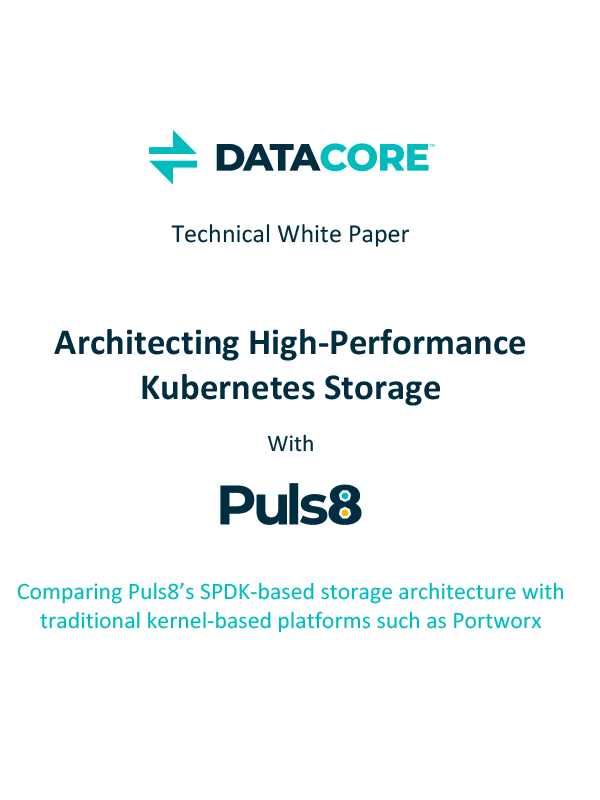
This white paper explores how Puls8’s SPDK-based, user-space storage architecture differs from traditional kernel-based platforms such as Portworx, and why NVMe-native designs are becoming increasingly important for modern storage systems.
In this white paper, you will learn:
- Key architectural differences in Kubernetes storage platforms
- How SPDK and user-space IO reduce storage overhead
- Why NVMe-native architectures improve performance and scalability
- Where modern storage architectures benefit cloud-native workloads
This is just a preview