Fehler umgehen (HA)
Dezentral wiederherstellen (DR)

An bestimmten Punkten wiederherstellen

Ausfälle verhindern

Datenverluste minimieren
Ausfallzeiten vermeiden
In Unternehmen ist die Datenverfügbarkeit ständig latent bedroht: durch Hardwareausfälle, Systemausfälle, Cyberangriffe, menschliches Versagen und unerwartete Umweltereignisse. Jede Störung kann zu Ausfallzeiten, Datenverlust und betrieblichen Beeinträchtigungen führen, wenn Daten nicht kontinuierlich zugänglich und wiederherstellbar sind.
Um den Geschäftsbetrieb ohne Unterbrechung aufrechtzuerhalten, benötigen Sie eine robuste Strategie für Geschäftskontinuität und Notfallwiederherstellung (BC/DR), die zuverlässig über verschiedene Infrastrukturen hinweg funktioniert. DataCore ermöglicht es Ihnen, die Verfügbarkeit zu erhöhen, Datenverluste zu minimieren und eine schnelle Wiederherstellung zu gewährleisten, indem bewährte BC/DR-Prinzipien konsequent in Ihrer Speicherumgebung angewendet werden.
- Wie gewährleisten Sie die Datenverfügbarkeit, wenn Komponenten ausfallen?
- Wie verhindern Sie, dass Ausfälle den Betriebsablauf stören?
- Wie schützen Sie sich vor Datenverlust oder Datenbeschädigung?
- Wie gewährleisten Sie die Wiederherstellung, wenn Ihre primären Systeme ausfallen?
- Wie können Sie Ihre Daten im letzten bekannten guten Zustand wiederherstellen?
- Wie aktualisieren Sie Ihre Speicherhardware ohne Ausfallzeit?
Drei Verteidigungslinien zur Verhinderung von Ausfallzeit und Datenverlust
DataCore wendet drei bewährte Prinzipien an, um Unternehmen dabei zu helfen, Ausfallzeiten zu vermeiden und den kontinuierlichen Zugriff auf kritische Daten aufrechtzuerhalten. Diese zusammenarbeitenden Verteidigungslinien fangen ein breites Spektrum an Störungsszenarien ab, von kleineren Komponentenausfällen bis hin zu vollständigen Ausfällen und unerwünschten Datenänderungen. Durch die Kombination von lokaler Redundanz und Failover, Remote-Wiederherstellung und Point-in-Time-Wiederherstellung können Sie Ihre Speicherumgebung ausfallsicher machen, ohne die bestehende Infrastruktur neu gestalten zu müssen.
Dieses mehrschichtige Modell bildet ein flexibles BC/DR-Framework, das sich an unterschiedliche betriebliche Anforderungen anpasst. Sie können jede der Verteidigungslinien einzeln implementieren, diese bei Bedarf um zusätzliche Ebenen erweitern oder alle drei gemeinsam nutzen, um maximalen Schutz und Kontinuität zu gewährleisten. Das Ergebnis sind vereinfachte Planung, optimierte Wiederherstellungsprozesse und das richtige Maß an Resilienz ohne unnötige Komplexität.
Fehler umgehen (HA)
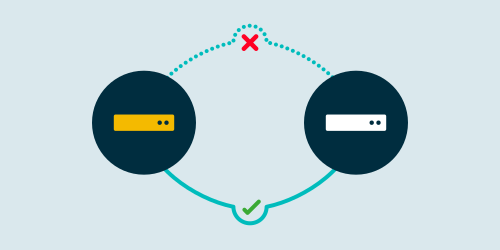
Behebt kleinere Probleme, z. B. wenn ein System oder einige seiner Komponenten ausfallen. Die Replikation von Daten innerhalb eines Standorts oder eines Metro-Clusters in Echtzeit zusammen mit dem automatischen Failover auf die zweite Kopie gewährleistet kontinuierlichen Datenzugriff ohne Datenverlust.
Dezentral wiederherstellen (DR)
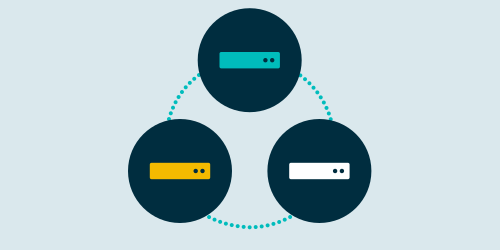
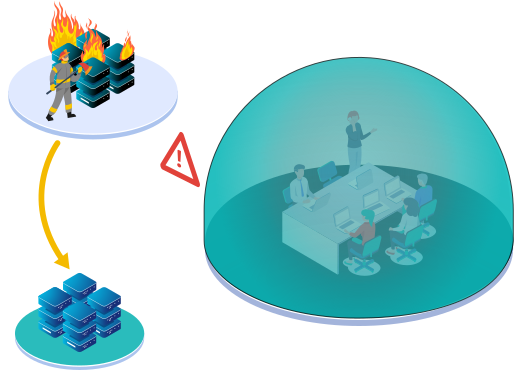
Behebt größere Ausfälle (z. B. Überschwemmungen, Brände oder Stromausfälle), die eine ganze Region betreffen. Das Erstellen von Replikaten an einem Remote-Standort/DR-Standort kann dazu beitragen, den Zugriff schnell wiederherzustellen und den Verlust von In-Flight-Daten an diesem Remote-Standort zu minimieren.
Failback auf den letzten guten Status
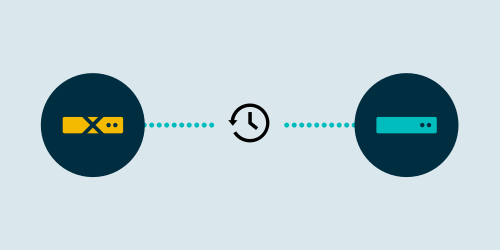
Ermöglicht die Wiederherstellung nach unerwünschten Änderungen, wie z. B. versehentlichem Löschen von Daten, Logikfehlern (Bugs) oder Angriffen von außen. Point-in-Time-Sicherungen und Snapshots gewährleisten, dass Daten aus einer vertrauenswürdigen Kopie wiederhergestellt werden können, wenn solche unvorhergesehenen Ereignisse auftreten.
Hauptvorteile
- Kontinuierlicher Geschäftsbetrieb trotz Geräte- oder Systemausfall
- Schnelle Wiederherstellung bei größeren Ausfällen und disruptiven Ereignissen
- Minimaler Datenverlust durch mehrschichtige Schutz- und Wiederherstellungsoptionen
- Nahtlose Integration in vorhandene Speicher und Infrastrukturen
- Plattform- und umgebungsübergreifender einheitlicher Datenschutz
- Unterbrechungsfreie Technologieaktualisierung, Migration und Erweiterung
- Vereinfachte BC/DR-Planung und operative Effizienz
Zwei Plattformen von DataCore für umfassende BC/DR-Abdeckung
SANsymphony für Geschäftskontinuität und Notfallwiederherstellung in Rechenzentren
SANsymphony ist eine Software-Defined Storage-Plattform, die die Grundlage für die Ausfallsicherheit in Rechenzentrumsumgebungen bietet. SANsymphony virtualisiert und zentralisiert Speicherressourcen über verschiedene Systeme hinweg, sodass Schutz, Verfügbarkeit und Wiederherstellung unabhängig von der zugrunde liegenden Blockspeicherhardware (SAN, HCI, DAS, JBOD usw.) einheitlich verwaltet werden können.
Durch die Orchestrierung der Spiegelung, Replikation und Speicherung von Daten über Fault Domains und Standorte hinweg schützt SANsymphony Ihre Anwendungen vor den Auswirkungen von Hardwarestörungen, Ausfällen und unerwünschten Datenänderungen. Es bietet Unternehmen eine einheitliche Möglichkeit, BC/DR-Richtlinien durchzusetzen, den zuverlässigen Zugriff auf kritische Informationen zu gewährleisten und den operativen Aufwand zu optimieren, der für den kontinuierlichen Schutz des Speichers im Zuge der Weiterentwicklung der Infrastruktur erforderlich ist.

- Synchrones Spiegeln in Echtzeit über unabhängige Fault Domains hinweg
- Unterstützt sowohl 2-Wege- als auch 3-Wege-Spiegelung für höhere Redundanz
- Automatisches Failover und Failback ohne menschliche Intervention
- Kontinuierlicher Zugriff bei Komponenten-, Geräte- oder Serverausfällen
- Transparente Resynchronisation nach Systemreparatur
- Aktiv-aktive Datenpfade für robuste Performance
- Verhindert bei Speicherausfällen Ausfallzeiten der Anwendungen
- Null RPO und Null RTO bei lokalen Ausfällen
- Unterstützt verteilte Cluster bzw. Metrocluster für die standortbezogene Verfügbarkeit über kurze Distanzen
- Asynchrone Replikation an Remote- oder sekundäre Standorte
- Automatisierte DR-Failover-, Failback- und Resynchronisationsfunktionen
- Speichert externe Kopien zum Schutz vor regionalen Ausfällen
- Unterstützt Wiederherstellungsabläufe für geplante oder ungeplante Ereignisse
- Unterstützt kontrollierte Standortumschaltung bei Wartungsarbeiten oder Ausfällen
- WAN-optimierte Replikation für DR-Szenarien über große Entfernungen
- Günstige RPO basierend auf Replikationsintervall und WAN-Latenz
- RTO abhängig von der Neustartzeit der Anwendung am DR-Standort
- Snapshots zur schnellen Wiederherstellung früherer Datenzustände
- Unterstützt die Konfiguration unveränderlicher Snapshots für manipulationssicheren Schutz
- Backup-Integration in führende Tools (Veeam, Commvault usw.).
- Continuous Data Protection (CDP) ermöglicht das Zurücksetzen auf präzise Zeitpunkte – oft im Abstand weniger Sekunden
- RPO hängt von der Snapshot-/CDP-Granularität ab; RTO variiert je nach Medium und Datengröße
- Schutz vor versehentlichem Löschen, Beschädigung und Logikfehlern
- Schnelle Wiederherstellung nach Ransomware-Angriffen oder böswilligen Änderungen
- Mehrere mögliche Wiederherstellungspunkte basierend auf den Aufbewahrungsanforderungen
- Kontinuierliche Einschätzung und Resilienzbewertung des Speicherschutzes
- Echtzeitbewertung von Redundanz-, Replikations- und Konfigurationszustand
- Sofortige Anzeige einer Verschlechterung des Schutzniveaus
- Hilft dabei, Fehlerbehebungen zu priorisieren, bevor Probleme zu Ausfallzeiten führen
- Bietet klare Transparenz hinsichtlich der Bereitschaft für Ausfallszenarien
- Verfolgt die Verbesserung im Zuge der Weiterentwicklung der Schutzebenen
- Abstraktion und Vereinheitlichung verschiedener SAN- und HCI-Speicher
- Funktioniert mit unterschiedlichen Speichersystemen, Hypervisoren und Plattformen
- Verlängert die Lebensdauer vorhandener Hardware und vermeidet Herstellerabhängigkeit
- Unterstützt unterschiedliche Speichergenerationen und -modelle
- Unterstützt unterschiedliche Protokolle für den Datenzugriff, darunter iSCSI, Fibre Channel und NVMe-oF
- Zentralisierte Speichersteuerungsebene für konsistente Speicherdienste
- Vereinfacht die BC/DR-Architektur in heterogenen Umgebungen
- Unterbrechungsfreie Hardware-Aktualisierung und Datenmigration
- Nahtlose Kapazitätserweiterung ohne Ausfallzeit
- Weniger Verwaltungsaufwand dank automatisierter Workflows
- Einheitliche Speicherdienste über alle Speicherebenen hinweg
- Konsolidierung mehrerer Schutzmechanismen auf einer Plattform
- Standardisierung der BC/DR-Operationen in verteilten Umgebungen

„SANsymphony arbeitet unter dem Gesichtspunkt der Hochverfügbarkeit extrem gut und ist für die proaktive und reaktive Behebung von Ausfällen gerüstet – bei gleichzeitig hoher Performance. Wenn ein Standort ausfällt, läuft der Rest weiter und die Endnutzer merken nicht einmal, dass es ein Problem gibt. Mit DataCore sind wir immer betriebsbereit.“
StarWind für hochverfügbare HCI an Edge-, ROBO- und KMU-Standorten
StarWind ist eine kompakte, hochverfügbare hyperkonvergente Infrastrukturplattform, die sich ideal für Edge-Standorte, Außenstellen/Zweigstellen und kleinere IT-Umgebungen eignet. StarWind kombiniert Rechenleistung und Speicher in einer einfachen, robusten Konfiguration, die den Betrieb kritischer Arbeitslasten ohne gemeinsam genutzte SAN-Hardware oder hohen Betriebsaufwand aufrechterhält. Das einfache Deployment-Modell, die integrierte Redundanz und das automatische Failover bieten zuverlässigen Schutz an Orten, an denen die IT-Ressourcen begrenzt sind. Damit ist StarWind eine leistungsstarke Business-Continuity-Lösung für verteilte Standorte.
- Echte 2-Server-HCI-Cluster mit synchroner Replikation
- Für Standard-Deployments mit 2 Servern ist kein externer Witness erforderlich
- Witness/Quorum optional für verbesserten Split-Brain-Schutz an verschiedenen Standorten
- Unterstützt 3-Wege-Spiegelung für höhere Redundanz, wo erforderlich
- Automatisches Failover und Failback für zuverlässigen Betrieb der Arbeitslasten
- Selbstreparatur mit Wiederherstellung der Redundanz nach einem Ausfall
- Kontinuierlicher Zugriff bei Server-, Festplatten- oder Komponentenausfällen
- Vereint Rechenleistung, Speicher und Virtualisierung in einem Cluster mit geringer Standfläche
- Ideal für Standorte mit begrenztem Platz- und Stromangebot
- Für gleichbleibende Performance ohne spezielle Speicher-Fachkenntnisse
- Integriertes Management-Interface für optimierte Abläufe
- Problemloses Deployment als einsatzfertige Appliance oder virtuelles SAN als reine Software
- Macht externe, gemeinsam genutzte SAN/NAS-Hardware überflüssig
- Minimale Hardware-Anforderungen und niedrige Einstiegskosten
- Für Umgebungen ohne oder mit begrenztem IT-Personal vor Ort konzipiert
- Remote-Management zur zentralen Überwachung verteilter Deployments
- Vorhersagbare, einfach zu bedienende Plattform für lokale kritische Anwendungen
- Unterstützt mehrere Hypervisoren, darunter VMware vSphere, Microsoft Hyper-V und Proxmox VE
- Speicherzugriff über unterschiedliche Protokolle möglich, einschließlich iSCSI und NVMe-oF
- Scale-up oder Scale-out bei wachsenden Standortanforderungen
Maßnahmen zur Sicherung der Geschäftskontinuität in unbeständigen Zeiten

Starten Sie Ihre kostenlose Testversion von SANsymphony in Ihrer eigenen IT-Umgebung. Die Installation dauert nur wenige Minuten.
Starten Sie Ihre kostenlose 30-Tage-Testversion von DataCore SANsymphony
Keine Ausfallzeiten mehr. Überragende Performance der Anwendungen. Geringere TCO für Speicher. Probieren Sie SANsymphony in Ihrer Umgebung aus und überzeugen Sie sich von den Vorteilen.

“DataCore ist definitiv einer der Gründe dafür, dass unsere missionskritischen Anwendungen schneller laufen. Die SANsymphony-Caching- und Leistungsbeschleunigungsfunktionen spielen hier eine wichtige Rolle.”

Lamar Nicholson
Storage & Virtual Environment Architect